Breast Implants
What it is
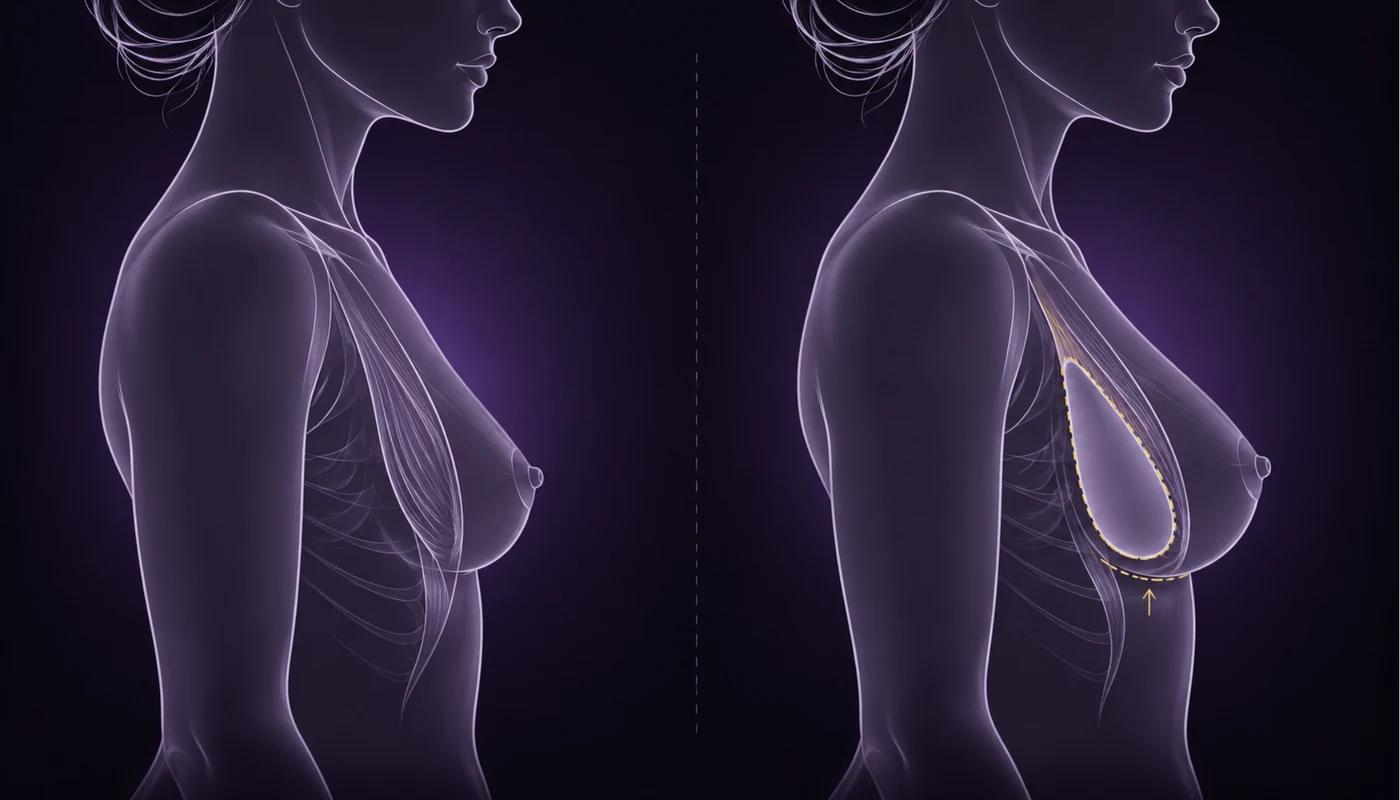
Breast augmentation places an implant to increase volume and to improve shape and symmetry. The decisions that determine the result are made before surgery: implant size and profile, placement above or below the muscle, and the incision site — each changes both the outcome and the recovery.
What to expect
Dr. Sibaja works through those choices against your own measurements and proportions rather than against a photograph. She also explains what implants require over a lifetime, so the decision is made with the long view in mind.
Request pricing & details
Via WhatsApp · replies within hours
Learn more about Breast Implants
Every answer is a starting point — your consultation goes deeper, personally.
What decisions actually determine the result?
Implant size and profile, placement above or below the muscle, and the incision site. Those three are decided before surgery and they shape both the outcome and the recovery more than anything that happens afterwards.
How is size chosen?
From your own measurements and proportions — chest width, tissue thickness, existing shape — rather than from a photograph of someone else. A size that suits another body may not suit yours, and Dr. Sibaja will explain why.
Above or below the muscle?
Below the muscle generally gives a more natural upper slope and is often chosen where tissue is thin; above can suit patients with more of their own tissue and involves a different recovery. It is a case-by-case decision.
Will it correct asymmetry?
It can improve it, and most breasts are naturally asymmetric to some degree. Perfect symmetry is not a realistic goal and any surgeon promising it is overselling. Dr. Sibaja will tell you what is achievable for you.
Do implants need replacing?
They are not lifetime devices. Most patients will need a further procedure at some point in their life, whether for rupture, capsular contracture or a change in preference. That should be part of the decision from the start.
What is the recovery?
Discomfort and restricted movement in the first days, with a supportive garment and a period away from exercise and lifting. Position and shape settle over the following months.
What can go wrong?
Capsular contracture, rupture, changes in nipple sensation, infection, and asymmetry requiring revision. These are uncommon but real, and you should hear the full list before consenting, not afterwards.
What about breastfeeding afterwards?
Most patients are still able to breastfeed, though it cannot be guaranteed for anyone, with or without surgery. Tell Dr. Sibaja if future pregnancy is part of your plans — it may influence the approach and the timing.
Often combined with
Many patients pair treatments into a single personalized protocol — ask Dr. Sibaja how these work together for your goals.